27 May 20265 Min Read
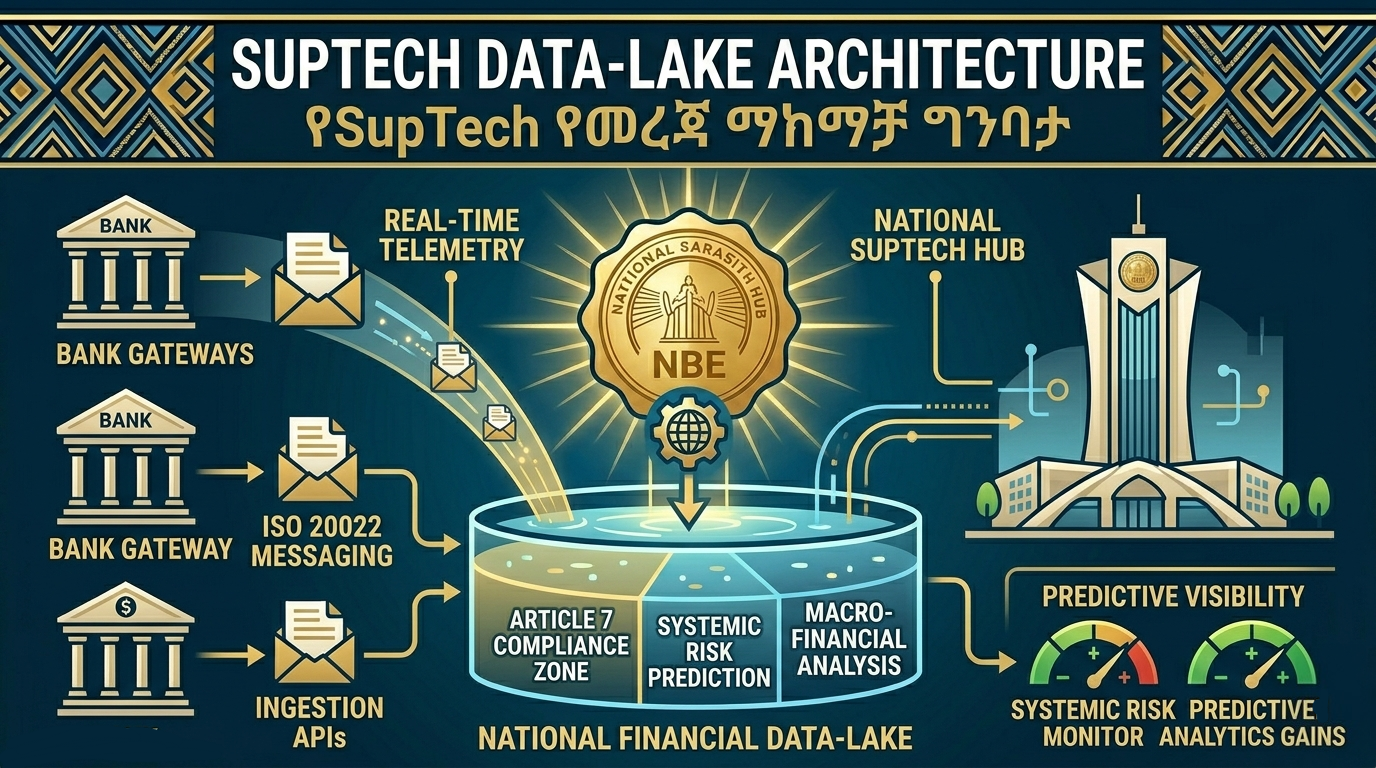
SupTech Data-Lake Architecture
የSupTech የመረጃ ማከማቻ ግንባታ
SupTech DataLake Architecture: A Technical Blueprint for the National Bank of Ethiopia (NBE)
1. Executive Summary
In the rapidly evolving landscape of digital finance, the National Bank of Ethiopia (NBE) requires a transition from traditional periodic reporting to realtime, datadriven supervision. This Supervisory Technology (SupTech) blueprint outlines the architecture of a National Financial DataLake. By centralizing telemetry from commercial banks, microfinance institutions, and payment gateways, the NBE can achieve predictive visibility into systemic risks, liquidity crunches, and fraudulent patterns.
2. Data Ingestion and API Strategy
The foundation of the DataLake is a highthroughput Ingestion Layer. To ensure seamless interoperability, the NBE will deploy a set of robust RESTful and gRPC Ingestion APIs. These APIs act as the primary gateways for regulated entities to transmit granular transaction data.
Standardization: The architecture mandates the ISO 20022 messaging standard. This global benchmark for financial messaging ensures that data from disparate sources (Core Banking Systems, Mobile Money platforms) is harmonized into a unified schema, reducing the need for complex ETL (Extract, Transform, Load) transformations later in the pipeline.
Streaming vs. Batch: The system supports both realtime streaming (via Apache Kafka) for highvelocity payment data and batch uploads for endofday balance sheets.
3. Storage Logic and Partitioning
To manage petabytes of financial telemetry, the DataLake utilizes a "Medallion Architecture" (Bronze, Silver, and Gold layers) built on distributed storage:
Partitioning Logic: Data is partitioned primarily by `Reporting_Entity_ID` and `Transaction_Date`. Secondary partitioning by `Transaction_Type` (e.g., Remittance, Loan, Deposit) ensures that analytical queries—such as "Total foreign currency inflow per bank per hour"—are executed with subsecond latency.
File Formats: Data is stored in optimized columnar formats (Apache Parquet/Avro). This reduces storage footprints by up to 80% and accelerates analytical processing compared to traditional CSV or JSON formats.
4. Predictive Visibility and Analytics
By centralizing telemetry, the NBE moves beyond descriptive statistics to predictive modeling.
Systemic Risk Monitoring: Machine Learning (ML) models analyze the interconnectedness of financial institutions. If a liquidity drop in one bank threatens a "domino effect," the system triggers automated alerts.
AML/CFT Detection: The DataLake facilitates crossinstitutional pattern matching. A series of small transactions across five different banks that aggregate to a significant sum can be flagged as "smurfing" in realtime, a feat impossible with siloed data.
5. Security and Governance
Given the sensitivity of financial data, the architecture incorporates:
ZeroTrust Security: Every API call is authenticated via OAuth2 and hardwarebased certificates.
Data Masking: Personally Identifiable Information (PII) is encrypted at rest and masked during general analysis, ensuring compliance with data privacy regulations while allowing macroeconomic research.
6. Conclusion
The National Financial DataLake is not merely a storage repository but a strategic asset. It empowers the NBE to transition from a "reactive" regulator to a "proactive" guardian of financial stability. Through ISO 20022 adoption and scalable partition logic, Ethiopia can build a resilient, transparent, and modern financial ecosystem.
1. Executive Summary
In the rapidly evolving landscape of digital finance, the National Bank of Ethiopia (NBE) requires a transition from traditional periodic reporting to realtime, datadriven supervision. This Supervisory Technology (SupTech) blueprint outlines the architecture of a National Financial DataLake. By centralizing telemetry from commercial banks, microfinance institutions, and payment gateways, the NBE can achieve predictive visibility into systemic risks, liquidity crunches, and fraudulent patterns.
2. Data Ingestion and API Strategy
The foundation of the DataLake is a highthroughput Ingestion Layer. To ensure seamless interoperability, the NBE will deploy a set of robust RESTful and gRPC Ingestion APIs. These APIs act as the primary gateways for regulated entities to transmit granular transaction data.
Standardization: The architecture mandates the ISO 20022 messaging standard. This global benchmark for financial messaging ensures that data from disparate sources (Core Banking Systems, Mobile Money platforms) is harmonized into a unified schema, reducing the need for complex ETL (Extract, Transform, Load) transformations later in the pipeline.
Streaming vs. Batch: The system supports both realtime streaming (via Apache Kafka) for highvelocity payment data and batch uploads for endofday balance sheets.
3. Storage Logic and Partitioning
To manage petabytes of financial telemetry, the DataLake utilizes a "Medallion Architecture" (Bronze, Silver, and Gold layers) built on distributed storage:
Partitioning Logic: Data is partitioned primarily by `Reporting_Entity_ID` and `Transaction_Date`. Secondary partitioning by `Transaction_Type` (e.g., Remittance, Loan, Deposit) ensures that analytical queries—such as "Total foreign currency inflow per bank per hour"—are executed with subsecond latency.
File Formats: Data is stored in optimized columnar formats (Apache Parquet/Avro). This reduces storage footprints by up to 80% and accelerates analytical processing compared to traditional CSV or JSON formats.
4. Predictive Visibility and Analytics
By centralizing telemetry, the NBE moves beyond descriptive statistics to predictive modeling.
Systemic Risk Monitoring: Machine Learning (ML) models analyze the interconnectedness of financial institutions. If a liquidity drop in one bank threatens a "domino effect," the system triggers automated alerts.
AML/CFT Detection: The DataLake facilitates crossinstitutional pattern matching. A series of small transactions across five different banks that aggregate to a significant sum can be flagged as "smurfing" in realtime, a feat impossible with siloed data.
5. Security and Governance
Given the sensitivity of financial data, the architecture incorporates:
ZeroTrust Security: Every API call is authenticated via OAuth2 and hardwarebased certificates.
Data Masking: Personally Identifiable Information (PII) is encrypted at rest and masked during general analysis, ensuring compliance with data privacy regulations while allowing macroeconomic research.
6. Conclusion
The National Financial DataLake is not merely a storage repository but a strategic asset. It empowers the NBE to transition from a "reactive" regulator to a "proactive" guardian of financial stability. Through ISO 20022 adoption and scalable partition logic, Ethiopia can build a resilient, transparent, and modern financial ecosystem.
የSupTech የመረጃ ማከማቻ ግንባታ
የሱፕቴክ (SupTech) የመረጃ ማከማቻ ንድፍ፡ ለኢትዮጵያ ብሔራዊ ባንክ የቀረበ የቴክኒክ ሰነድ
1. ማጠቃለያ
የፋይናንስ ዘርፉ በቴክኖሎጂ እየተቀየረ ባለበት በዚህ ወቅት፣ የኢትዮጵያ ብሔራዊ ባንክ ከተለመደው ወቅታዊ ሪፖርት አቀባበል ወደ ቀጥታና ፈጣን የመረጃ ክትትል መሸጋገር ይኖርበታል። ይህ የሱፕቴክ (SupTech) የቴክኒክ ንድፍ ለብሔራዊ የፋይናንስ መረጃ ማከማቻ (National Financial DataLake) ግንባታ መሰረት የሚሆን ነው። መረጃዎችን (Telemetry) በአንድ ማዕከል በማከማቸት፣ ብሔራዊ ባንኩ በፋይናንስ ሥርዓቱ ላይ ሊከሰቱ የሚችሉ ስጋቶችን አስቀድሞ የመተንበይ እና የመቆጣጠር አቅሙን ይገነባል።
2. የመረጃ አሰባሰብ እና የኤፒአይ (API) ስልት
የመረጃ ማከማቻው ዋናው አካል የመረጃ መቀበያ ንብርብር (Ingestion Layer) ነው። የኢትዮጵያ ብሔራዊ ባንክ የንግድ ባንኮች እና የፋይናንስ ተቋማት ዝርዝር መረጃዎችን በፈጣን ሁኔታ እንዲልኩ የሚያስችሉ የኤፒአይ (Ingestion APIs) በሮችን ይዘረጋል።
የመረጃ ደረጃ (Standardization): ይህ ንድፍ ISO 20022 የተሰኘውን ዓለም አቀፍ የፋይናንስ መልዕክት ልውውጥ መስፈርት ተግባራዊ ያደርጋል። ይህም ከተለያዩ የባንክ ሥርዓቶች የሚመጡ መረጃዎች ወጥ በሆነ መልክ እንዲቀመጡና ለትንተና ምቹ እንዲሆኑ ያደርጋል።
ፈጣን ስርጭት: ሥርዓቱ የክፍያ መረጃዎችን በቅጽበት (Realtime) ለመቀበል እንደ Apache Kafka ያሉ ቴክኖሎጂዎችን የሚጠቀም ሲሆን፣ የቀን መጨረሻ ሪፖርቶችን ደግሞ በጅምላ (Batch) የመቀበል አቅም ይኖረዋል።
3. የመረጃ አደረጃጀት እና ክፍፍል (Partitioning)
ከፍተኛ መጠን ያለውን የፋይናንስ መረጃ በብቃት ለማስተዳደር፣ መረጃው በሦስት ንብርብሮች (Bronze, Silver, Gold) ይከፈላል።
የክፍፍል አመክንዮ (Partition Logic): መረጃዎች በዋናነት በ"ተቋሙ ስም" እና "በተፈጸመበት ቀን" ተከፋፍለው ይቀመጣሉ። ይህም ተቆጣጣሪዎች እንደ "የውጭ ምንዛሬ ግኝት በየሰዓቱ" ያሉ ውስብስብ ጥያቄዎችን በሰከንዶች ውስጥ ምላሽ እንዲያገኙ ያስችላቸዋል።
የአንቀጽ 7 ተገዢነት: ይህ የቴክኒክ ንድፍ በተለይ ለፋይናንስ ተገዢነት የወጣውን አንቀጽ 7 መስፈርቶች ለማሟላት ታስቦ የተዘጋጀ ነው። ተቋማት ግልጽ፣ ትክክለኛና ወቅታዊ መረጃዎችን እንዲያቀርቡ በማስገደድ የቁጥጥር ስራውን ውጤታማ ያደርገዋል።
4. የትንበያ አቅም እና ስጋት ክትትል
መረጃዎችን በአንድ ማዕከል ማከማቸት ብሔራዊ ባንኩ ያለፈውን መረጃ ከመመልከት ባለፈ የወደፊቱን እንዲተነብይ ይረዳዋል።
ሥርዓታዊ ስጋት ክትትል: የሰው ሰራሽ አስተውሎት (ML) ሞዴሎች በአንድ ባንክ ላይ የሚከሰት የገንዘብ እጥረት በሌሎች ላይ ሊያመጣ የሚችለውን ጫና (Systemic Risk) ቀድመው ያሳውቃሉ።
ሕገወጥ የገንዘብ ዝውውር (AML): በተለያዩ ባንኮች ተከፋፍለው የሚደረጉ አጠራጣሪ ዝውውሮችን በአንድ ላይ በማገናኘት የሕገወጥ ድርጊቶችን ምልክት በወቅቱ ለመለየት ያስችላል።
5. የመረጃ ደህንነት እና አስተዳደር
የፋይናንስ መረጃ ሚስጥራዊነት ከፍተኛ በመሆኑ፣ ንድፉ ጥብቅ የደህንነት ጥበቃዎችን አካቷል። ማንኛውም የመረጃ ጥያቄ በዲጂታል ሰርተፊኬት የተደገፈ መሆን አለበት። የግል መረጃዎች (PII) በትንተና ወቅት እንዳይታዩ ተደብቀው (Masked) የሚቀመጡ ሲሆን፣ ይህም የዜጎችን የዳታ ግላዊነት መብት ይጠብቃል።
6. ማጠቃለያ
ይህ ብሔራዊ የፋይናንስ መረጃ ማከማቻ ባንኩን ከባህላዊ የቁጥጥር ስልት ወደ ዘመናዊና መረጃተኮር አመራር ያሸጋግረዋል። የ ISO 20022 መስፈርትን እና ዘመናዊ የመረጃ አደረጃጀትን በመከተል ኢትዮጵያ አስተማማኝ እና ግልጽነት የሰፈነበት የፋይናንስ ኢንዱስትሪ መገንባት ትችላለች።
Full Read
1. ማጠቃለያ
የፋይናንስ ዘርፉ በቴክኖሎጂ እየተቀየረ ባለበት በዚህ ወቅት፣ የኢትዮጵያ ብሔራዊ ባንክ ከተለመደው ወቅታዊ ሪፖርት አቀባበል ወደ ቀጥታና ፈጣን የመረጃ ክትትል መሸጋገር ይኖርበታል። ይህ የሱፕቴክ (SupTech) የቴክኒክ ንድፍ ለብሔራዊ የፋይናንስ መረጃ ማከማቻ (National Financial DataLake) ግንባታ መሰረት የሚሆን ነው። መረጃዎችን (Telemetry) በአንድ ማዕከል በማከማቸት፣ ብሔራዊ ባንኩ በፋይናንስ ሥርዓቱ ላይ ሊከሰቱ የሚችሉ ስጋቶችን አስቀድሞ የመተንበይ እና የመቆጣጠር አቅሙን ይገነባል።
2. የመረጃ አሰባሰብ እና የኤፒአይ (API) ስልት
የመረጃ ማከማቻው ዋናው አካል የመረጃ መቀበያ ንብርብር (Ingestion Layer) ነው። የኢትዮጵያ ብሔራዊ ባንክ የንግድ ባንኮች እና የፋይናንስ ተቋማት ዝርዝር መረጃዎችን በፈጣን ሁኔታ እንዲልኩ የሚያስችሉ የኤፒአይ (Ingestion APIs) በሮችን ይዘረጋል።
የመረጃ ደረጃ (Standardization): ይህ ንድፍ ISO 20022 የተሰኘውን ዓለም አቀፍ የፋይናንስ መልዕክት ልውውጥ መስፈርት ተግባራዊ ያደርጋል። ይህም ከተለያዩ የባንክ ሥርዓቶች የሚመጡ መረጃዎች ወጥ በሆነ መልክ እንዲቀመጡና ለትንተና ምቹ እንዲሆኑ ያደርጋል።
ፈጣን ስርጭት: ሥርዓቱ የክፍያ መረጃዎችን በቅጽበት (Realtime) ለመቀበል እንደ Apache Kafka ያሉ ቴክኖሎጂዎችን የሚጠቀም ሲሆን፣ የቀን መጨረሻ ሪፖርቶችን ደግሞ በጅምላ (Batch) የመቀበል አቅም ይኖረዋል።
3. የመረጃ አደረጃጀት እና ክፍፍል (Partitioning)
ከፍተኛ መጠን ያለውን የፋይናንስ መረጃ በብቃት ለማስተዳደር፣ መረጃው በሦስት ንብርብሮች (Bronze, Silver, Gold) ይከፈላል።
የክፍፍል አመክንዮ (Partition Logic): መረጃዎች በዋናነት በ"ተቋሙ ስም" እና "በተፈጸመበት ቀን" ተከፋፍለው ይቀመጣሉ። ይህም ተቆጣጣሪዎች እንደ "የውጭ ምንዛሬ ግኝት በየሰዓቱ" ያሉ ውስብስብ ጥያቄዎችን በሰከንዶች ውስጥ ምላሽ እንዲያገኙ ያስችላቸዋል።
የአንቀጽ 7 ተገዢነት: ይህ የቴክኒክ ንድፍ በተለይ ለፋይናንስ ተገዢነት የወጣውን አንቀጽ 7 መስፈርቶች ለማሟላት ታስቦ የተዘጋጀ ነው። ተቋማት ግልጽ፣ ትክክለኛና ወቅታዊ መረጃዎችን እንዲያቀርቡ በማስገደድ የቁጥጥር ስራውን ውጤታማ ያደርገዋል።
4. የትንበያ አቅም እና ስጋት ክትትል
መረጃዎችን በአንድ ማዕከል ማከማቸት ብሔራዊ ባንኩ ያለፈውን መረጃ ከመመልከት ባለፈ የወደፊቱን እንዲተነብይ ይረዳዋል።
ሥርዓታዊ ስጋት ክትትል: የሰው ሰራሽ አስተውሎት (ML) ሞዴሎች በአንድ ባንክ ላይ የሚከሰት የገንዘብ እጥረት በሌሎች ላይ ሊያመጣ የሚችለውን ጫና (Systemic Risk) ቀድመው ያሳውቃሉ።
ሕገወጥ የገንዘብ ዝውውር (AML): በተለያዩ ባንኮች ተከፋፍለው የሚደረጉ አጠራጣሪ ዝውውሮችን በአንድ ላይ በማገናኘት የሕገወጥ ድርጊቶችን ምልክት በወቅቱ ለመለየት ያስችላል።
5. የመረጃ ደህንነት እና አስተዳደር
የፋይናንስ መረጃ ሚስጥራዊነት ከፍተኛ በመሆኑ፣ ንድፉ ጥብቅ የደህንነት ጥበቃዎችን አካቷል። ማንኛውም የመረጃ ጥያቄ በዲጂታል ሰርተፊኬት የተደገፈ መሆን አለበት። የግል መረጃዎች (PII) በትንተና ወቅት እንዳይታዩ ተደብቀው (Masked) የሚቀመጡ ሲሆን፣ ይህም የዜጎችን የዳታ ግላዊነት መብት ይጠብቃል።
6. ማጠቃለያ
ይህ ብሔራዊ የፋይናንስ መረጃ ማከማቻ ባንኩን ከባህላዊ የቁጥጥር ስልት ወደ ዘመናዊና መረጃተኮር አመራር ያሸጋግረዋል። የ ISO 20022 መስፈርትን እና ዘመናዊ የመረጃ አደረጃጀትን በመከተል ኢትዮጵያ አስተማማኝ እና ግልጽነት የሰፈነበት የፋይናንስ ኢንዱስትሪ መገንባት ትችላለች።
© 2026 TIMONA Intelligence Hub